01
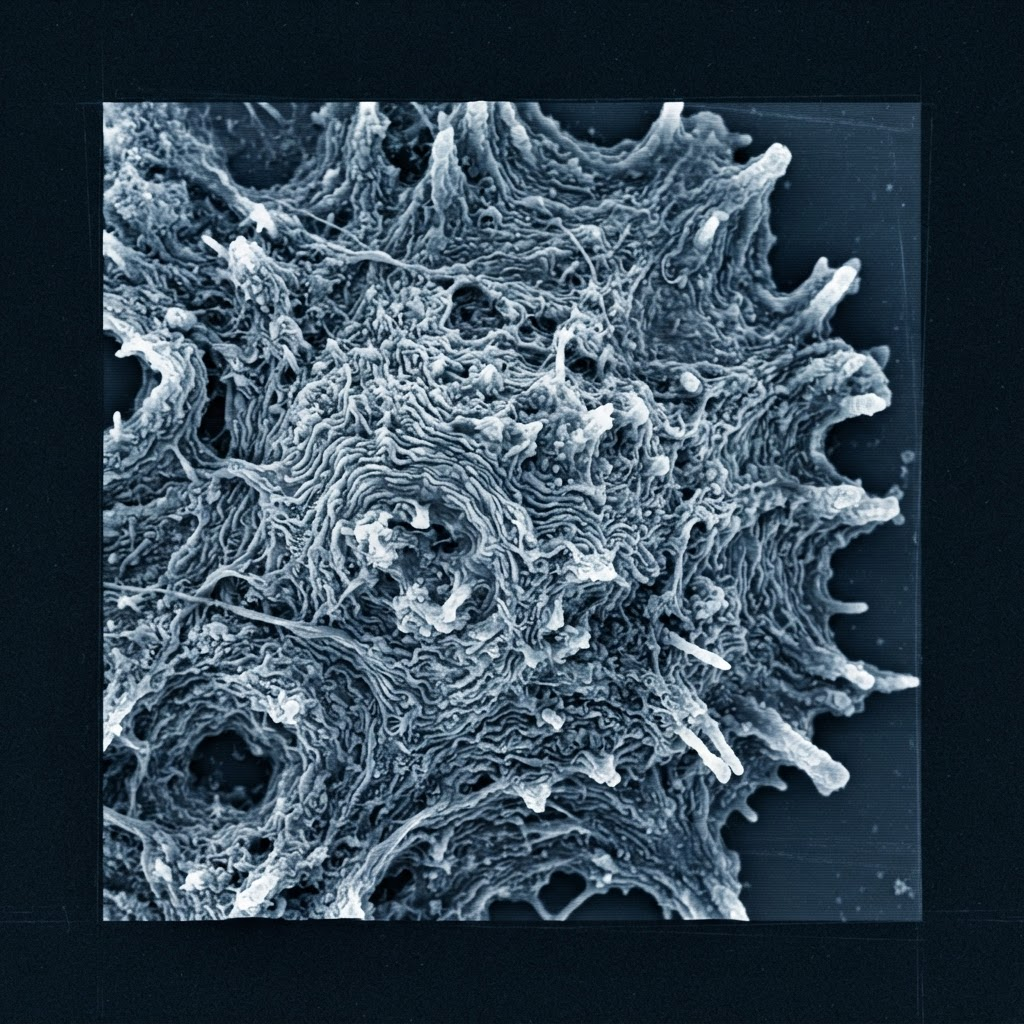
Applied AFM, fluid-shear assays, digital image correlation, creep analysis, and cytoskeletal imaging to living biological cells.
 Project 01
Translational Cancer Research
I used a range of mechanical characterization techniques on biological cells to distinguish the physical properties of normal cells from cancer cells — from breast to brain — as a route to earlier, physically grounded diagnosis.
The problem
Can cancer cells be distinguished through their mechanical behavior?
Approach
Single-cell mechanical characterization, viscoelastic creep analysis, cytoskeletal structure, and statistical analysis.
Outcome
Investigated measurable differences and heterogeneity in malignant and non-malignant cell behavior.
What I led and delivered
01
Applied AFM, fluid-shear assays, digital image correlation, creep analysis, and cytoskeletal imaging to living biological cells.
02
Compared normal and malignant cell mechanics across breast and brain cancer models, respecting the biological context rather than forcing a universal biomarker.
03
Connected cellular stiffness, viscosity, creep behavior, and cytoskeletal structure to diagnostic hypotheses and targeted-therapy design.
Research underpinning this work
2022
Journal of Biomedical Materials Research Part A
2026
Journal of the Mechanical Behavior of Biomedical Materials
2024
Biophysical Journal
Demonstrates
Biomedical research · quantitative thinking · diagnostic translation